Tuesday, 21 September 2010

Leach's Petrel ringing

I did promise to put up some photos and some information about the Storm and Leach's Petrel ringing, so here it is! I've been a bit slow about it as I have just been on training to start work for the British Antarctic Survey, at King Edward Point, South Georgia. I'll have to put all about that up next now won't I!!

There is something great about going out to try and catch Storm and Leach's Petrels. Heading out in the late evening to a remote headland, setting up the nets, and setting the tape lure playing the eerie calls out over the sea to entice in these almost unbelievably small ocean wanderers.

Measuring the wing length

It didn't take too long for the Stormies to start appearing. They have an almost moth or bat like flight, flying around investigating the noise from the tape lures before flying into the net. Carefully and quickly they were removed from the net, carefully placed in fabric bird-bags, and then taken to the ringing station for processing. After some time, our first Leach's appeared! Success, and a great deal of excitement too, especially for those of us who hadn't seen them before.

Handsome chap

At the ringing station Storm Petrels were ringed and released, and anything interesting was noted. Leach's Petrels were ringed, weighed, measured, and inspected for brood patches and moult. The size difference compared to a Storm Petrel was clearly notable, and we took a few photos to illustrate this, and also to record some interesting moult patterns.


On occasions it was possible to see the Petrels against the sky as the flew around and into the nets. Leach's Petrels were especially notable due to their bigger size, and they were also heard calling on a number of occasions, an amazing sound indeed!

Comparing the size difference of Leach's Petrel (left) and Storm Petrel (right)

I was lucky enough to help out with the ringing over a number of nights, and finished in the early morning as it began to get light at around 3:30am. They were long nights, but a brilliant experience and well worth the effort.

Leach's posing before dissapearing into the night

Cheers Will and Rory for a great time :-)

Tuesday, 17 August 2010

Yikes it's a Sykes' Warbler

Just thought I'd put in a quick post about the Sykes' Warbler found in Burrafirth by Rory and Will. If anyone is interested in photos for publishing then get in touch, these are much reduced as I am on dialup, high res versions are available, contact me on:   info "at" amwphotos.co.uk


Thanks lads for finding a stunner.

Storm and Leachs' Petrel ringing report to follow shortly :-)


Friday, 30 July 2010

North to South

Well, I've applied, been interviewd, been medically examined (!) and been offered a job with the British Antarctic Survey to work at King Edward Point in South Georgia! This is a dream job for me, something I have always wanted to do and I still quite can't believe I'm getting to do this! This blog started with me in the Falklands, followed me back north to Shetland, and will continue when I head south again.

One of my friends from uni came to visit, and I took them to see the sights of Shetland. Otters have to be one of the highlights for anyones visit, and we were lucky to see them a few times. The best sighting was at the Toft ferry terminal, the obliging otter even came up the beach to within a few meters and ate a big fish infront of us!


Beautiful wildflowers at Breken sands, north Yell

A beautiful night at Burrafirth (midnight)

The shore station lit up by a moth trap

With the Red Throated Diver chicks getting to a good size it was time to do the annual ringing expedition. Being a Schedule 1 species you have to have a special licence to ring divers, you also need a licence to approach the breeding lochans, and also to photograph them there. In the north of Unst we ringed three chicks on Hermaness NNR, and three chicks off the reserve. Just south of the reserve we caught an adult that had been ringed five years ago on the reserve. This was great to know, but even more impressive was an adult from the south of Unst that was discovered to have been ringed 24 years ago! This beats the previous longevity record of 23yr 7months.

Measuring the bill length

Releasing one of the chicks

A large chick posing until it realised it was free!

As I was coming down from the cliffs I spotted a Bonxie regurgitating food for it's two chicks really close to the path. Watching it briefly it flew up over me and landed just the other side of a small lochan, and started feeding on a dead Bonxie chick. Every time another bonxie flew over head it would display before going back to eating some more. Cannibalism isn't uncommon, but can be increased by people walking through the middle of colonies, disturbance causes the chicks to run away and move into neighbouring territories where they are often attacked. This is why it is important to keep to the paths.


Wednesday, 14 July 2010

Summer time

If any of you have seen the latest BBC Wildlife magazine then I hope you read the article about Great Skuas or Bonxies as they are known in Shetland. The photos for the article were taken on Hermaness NNR back in 2009, by Andrew Parkinson, he's a really good wildlife photographer, and his website is well worth a look.

I've been out a few times to try and get some good photos of the Bonxies flying past a setting sun. This is fraught with difficulty, it looks like a good evening, and then along comes a big cloud and blots out the sun, or there is a big cloud bank out to sea so the sun is too bright when it disapears. Autofocus sometimes gets a bit confused when you try and track the bird, and switching from focusing on the left side to the right side is a faff when birds are wheeling about all over the place, so manual focus is order of the day. And most importantly is finding somewhere to sit where you're not disturbing them but where they are flying around between you and the sun! As you can see below, it works out OK eventually!

Bonxie shortly before sunset

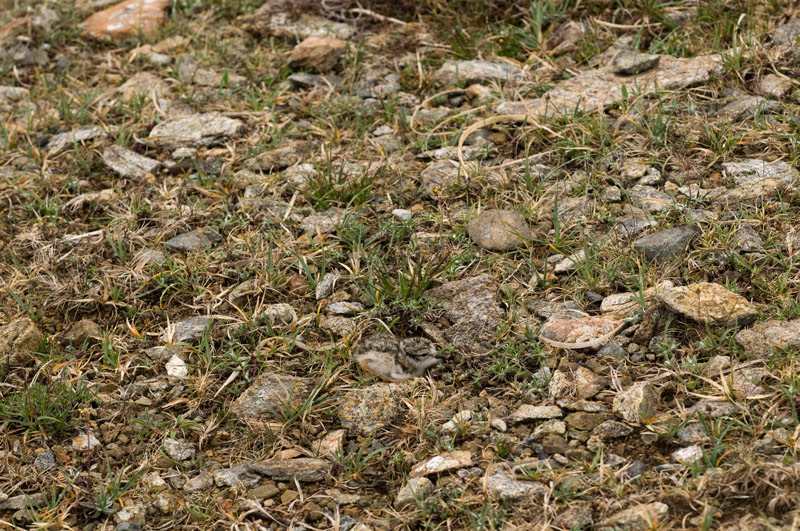
On one of my weekly wanders around the Keen of Hamar NNR I came across this very sweet little bundle of fluff. I would probably never have found it had I not noticed it running around before it froze, but that is the general idea to stop it becoming something elses dinner.

Ringed Plover chick

Ringed Plover chicks hide very well!

Most of the flowers on the Keen of Hamar have finished flowering. One of the plants I didn't get into my last blog though was the moonwort. It is at most 20mm tall, and a very interesting little plant almost looking like some kind of Cobra.

Moonwort

Most of the campion has gone over now too, the incredible vivid pink is difficult to capture on camera and reproduce on screen, so I had to play a little with the next picture to get it looking true to life.

Campion

There are lots of other flowers out now though, which I hope to be able to get some photos of in the next week or so. I don't think I have ever seen such an incredible carpet of Ragged Robin as there is in the fields around Haroldswick.

Thursday, 24 June 2010

Botanical Beauties

As most of my blogs so far have made mention of the birds up here I though it was about time that I gave some publicity to the amazing plant life. Some of Britains rarest flowers grow up here, so it would have to be on the 'must visit' list of any botanist or naturalist. One thing I havn't done is include any scale object in these photos, so I'll try and include some measurements in the text. As many of the places these plants are found are particularly exposed and harsh the plants are themselves only very small. Definately a hands and knees task for getting a good look. All of the plants here are found on the Keen of Hamar NNR.

Starting off with one of our rarest plants, the Edmondston's Chickweed, which is only found on the serpentine debris of Unst. Amazingly it was discovered in 1837 by Thomas Edmondston who was only 12 at the time! The flowers are about 20mm.

Edmondston's chickweed

Norwegian Sandwort, a species more common in arctic alpine areas of Scandinavia, it survives here in the harsh conditions. It really is small, and very easy to miss with flowers only 6-8mm across consisting of 5 petals.

Norwegian sandwort

Another arctic alpine plant is the Northern rock cress. This is a pretty little plant, with the flowers attached to the end of a stalk that can be around 30mm long. The flowers are around 8mm across. This makes it tricky to get a good photo of the flowers and leaves. The flowers have 4 petals, and are often a pretty pink colour.

Northern rock cress

Some of the showier flowers are the orchids, Heath spotted orchid, Northern marsh orchid, Frog orchid, Early purple orchid, Fragrant orchid. The first three of these are pictured below. In exposed locations they may be only 30-50mm tall, but in sheltered spots the Northern marsh orchid can be around 150mm. This year there are some really nice examples of the Frog orchid.

Northern marsh orchid

Heath spotted orchid

Frog orchid

Growing low to the ground in the lower areas of the Keen is Stone bramble.

Stone bramble

Not all the plants are showy flowers though. Black spleenwort grows in the dry stone wall crossing part of the reserve. And there are tiny but quite incredible Moonwort too, which I havn't got a good photo of so far this year.

Black spleenwort

After what was quite a harsh winter the arctic-alpine plants seem to be having a bumper year, maybe the cold weather has helped in the germination of seed.

Please remember that the serpentine debris of the Keen of Hamar is quite a delicate habitat, try not to kick stones around, and look carefully where you walk, the plants are small and easy to overlook. There are some panels that are placed next to the key plant species, look carefully as you approach them so that you don't tread on other plants.