Thursday, 4 February 2010

Hectic last few weeks

The last few weeks of my stay here have been really busy, penguin counting, shorebird surveys, data entry, maintaining the landrovers, meeting lots of new people, going out sailing etc.

A trip to Volunteer Point to count penguin chicks was required, along with an overnight camp on the coastal green. Famous for the King Penguin colony we were counting Gentoo and Magellanic penguins, but there was plenty of time to enjoy the evening with the Kings too. It's a rather surreal feeling when you are kept awake at night by penguin calls, especially the Magellanics that sound like donkeys braying.

Counting Magellanic penguins in their burrows

A handsome King Penguin in the evening light

Further Penguin chick counts included a trip to the Rockhoppers at Berkley Sound. Back in November there had been a Northern Rockhopper, and amazingly it was still there, and looking fat too. Normally they are up in Tristan de Cuna, and this is only the 4th record of one visiting the Falkland Islands. The following day it was back out to Berkley sound to do some stomach content sampling of the Rockhoppers. The first challenge is to catch them, not easy on a rocky cliff, and they are pretty quick, so you need to use a bit of surprise! The general idea is to put a tube into their stomach, fill with water, then turn them upsidedown over a bucket and tickle their throat with a finger, out pours a lovely concoction of fish larvae, krill and small squid.

Northern Rockhopper

Stomach contents analysis

One of the visiting yachts I had the chance of catching up with is the Ocean Watch. A group of sailors, scientists, a writer and a photographer have been sailing Around the Americas on an expedition of discovery to raise awareness of the threats to our oceans and the need to take action. Some of the work they have been doing is quite amazing, they have a weather station atop the mast, and a camera array taking 44,000 photos a day to look at wave patterns! They were a really nice bunch, and much fun was had visiting their yacht and the pub. During this time I also met up with a lovely couple from Seattle with a beautiful yacht, and they were kind enough to take me out sailing. For my first sailing trip it was great fun, putting in reefs, raising and lowering sails, tacking etc. I even got to drive too! We didn't go very far, and sailed back into Stanley as part of a flotilla to welcome Commander Dilip Dhonde of the Indian Navy, he is the first man from India to sail around the world single handed, so good luck to him on his final legs to Cape Town and back to India.

The Ocean Watch

 Further survey work has included more shorebird surveys, this time on the northern coast of Lafonia. Staying in a small house called The Wreck the coastline was very pretty, white calcerous seaweed beaches, blue sea, but not a huge number of birds! The house was lovely, an open peat fire, a peat stove, a little 'put put' diesel generator and beautiful uninterrupted scenery. Along the coast we were amazed to find the remains of a large number of stranded Pilot Whales. One set of about 40 had stranded in the 80's, and a dozen more in 2003, the remains of which were still covered in bits of dried skin.

 The lower jaw of a Pilot Whale that stranded back in 2003

The final two trips of my stay were both Penguin counting excursions. First was to head back to Lafonia, staying at Walker Creek and Fanny Cove house, counting the Gentoo Penguins, and helping a botanist from Kew to look for some plants. The Gentoo penguins were pretty big by now, and a lot of them had already moulted out of their fluffy down, so counting was quite tricky. Add to this their curiosity and tendency to move from one sub-colony to another and counting was getting rather difficult! On one of the ponds we passed were some Silvery Grebes, and White tufted Grebes, they were close to the edge so I was able to get some nice photos.

 White-tufted Grebe

Fanny Cove house is almost original to how it was built a hundred years ago or so. The only addition has been a 'light engine'. What is meant by this is a generator wired up to all the lights in the house, yes all of them, no lightswitch, just the crank on the generator! It was really comfortable, and there was an open peat fire and peat stove too. Whilst down at Bull Point we were on the look out for Dusen's Moonwort, and sure enough we found some! Driving the Land Rover very slowly along the track we had our heads leant out the windows scouring the ground for it, a comfortable way to survey I think!

Fanny Cove house

Dusen's Moonwort

We were blessed with the weather and spectacular beaches, so I even went for a paddle. It may look tropical, but the sea certainly isn't. It's not too bad once you've lost the feeling in your feet!

Bull Point, yes this really is the Falklands!

One of my last duties here: a visit the Falklans Island Radio Service, hopefully third time lucky my radio interview will work, and is due to be broadcast next Thursday in the Conservation Conversations slot hosted by Liz, so keep a listen out on www.firs.co.fk 

Well, that's about it for my Falkland Adventure. I'm heading off on the flight first thing tomorrow morning, and stopping off in Ascension for 4 days on the way back home. It's been so amazing down here, spectacular wildlife, rugged scenery, and I've made some rally great friends too. It's a real wrench to leave, and I'm already planning when I'll be able to come back again.

Sunday, 24 January 2010

Beauchene Coastal Bird Survey

SMSG Christmas 2009 Shorebird Survey

In the crazy summer survey season it's back off one trip, and straight out on another, so after a few hours in Stanley after flying in from West Falkland I was off on the Shallow Marine Survey Group trip to Beauchene Island, the most Southerly island in the Falklands archipelago.

It was a spectacular trip, and we were out over Christmas too, what a way to spend the festive season, with a great bunch of people, on a yacht in a far flung place!!

Below is the trip report, and if you'd like to see some photos then follow the link here beauchene trip photo gallery


Survey by Celine Blanchard and Alastair Wilson

Distance covered: approx 5.5km of coastline
310 birds counted (excluding chicks, Black-browed Albatross, Rockhopper Penguin, Gentoo Penguin, Magellanic Penguin, Imperial Shag and Wilson’s Storm Petrel)
Total of 16 species

The coastline of Beauchene Island consisted of boulder beaches along parts of the western side, tall cliffs at the southern, northern and north eastern sides, and also areas of scoured rock. The predominant vegetation was Tussac Grass, which covered much of the island, except the areas of the albatross colony, and the southern end of the island which was bare rock. The only other plants to be found were Smooth Ragwort, Bittercress and Antarctic water starwort.

Debris including driftwood, ropes, fishing net, buoys, and other litter was found on the boulder beaches. There was also natural algal debris on the boulder beaches which provides suitable habitat for the prey of Cobbs Wren and Tussacbirds.

There were very few terrestrial birds on Beauchene which is unsurprising considering the small size, and remoteness of the island. The only passerines were Cobb’s Wren, Tussacbird and Black-throated Finch, with Striated caracara being the only terrestrial non-passerine. There is no suitable habitat (mud, sand etc) for wading birds, and the extreme exposure during the winter may preclude Steamer Ducks and Kelp Geese from living here all year.

Tussacbird
Cobb’s Wren
Striated Caracara
Rockhopper Penguin
Black-browed Albatross
Rock Shag
Pale Faced Sheathbill
Imperial Shag
Kelp Gull
Falklands Skua
Wilson’s Storm Petrel
Southern Giant Petrel
Black-throated Finch
Gentoo Penguin
Magellanic Penguin
Dolphin Gull

Wednesday, 30 December 2009

West Falkland botanical trip

With the prospect of two weeks in West Falkland followed by an almost immediate transfer to a trip to Beauchene and Sea Lion Island with the Shallow Marine Survey Group there was quite a bit of juggling of kit to be done, with particular attention to camera gear as the FIGAS weight limit is only 20kg.

All the gear, food, plant 'stuff', camping stuff, fuel etc was loaded into the red FC Landrover and we gave it the once over. Early on the 29th Nov I set off for the Ferry terminal at New Haven, the reverse on, drive off ferry was pretty basic but functional, and there was tea and coffee available too.


Ferry to Port Howard on West Falkland

This ferry is rather multifunctional serving lots of the smaller islands so some of it's work is as a bit of a 'landing craft' affair. Unfortunately this makes it a bit of a rubbish ferry!! When the Shetland ro-ro ferries are running in a force 10 this thing wimps out in a stiff breeze! Seems a bit of a bad plan in such a windy place! Maybe there is a good case for a proper ferry and a landing craft?

Once at Port Howard I bought some bread having left it in the freezer in Stanley, and headed on my way down to Port Stephens at the other end of West Falkland.


A rather straight road!

The road network in the Falkland Islands is a fairly new thing, this is especially so in West Falkland. The tracks are pretty good in most places, although there are some rutted sections which you have to be careful of.


Port Stephens Settlement

Most settlements are much emptier than they used to be, farms have less sheep, bikes have replaced ponies, people have headed off to Stanley. Port Stephens is a beautiful place, the rock formations are incredible, lovely hills, and a beautiful sea.


False Plantain

One of the attractions of Port Stephens is the False Plantain. This is the only place it is found, so it was something I thought I'd go and find. Armed with the GPS coordinates I headed off. It was fairly breezy, and after a short while the heavens opened and added a nice dose of rain into the bargain! I carried on anyway, past a Gentoo colony, past the rockhoppers, and on towards the False Plantain. The erroded sandstone formed amazing features, and I was given a heck of a fright when 2 goats appeared behind me! They followed for quite a while and are apparently pets that have been put out to graze! Well, bang on coordinate there were plenty of False Plantains, small and large, and some coming into flower too, quite a neat little plant really.


Black-throated (Canary winged) Finch


Variable (Red-backed) Hawk

Went for a walk up to Hawk's Nest, and surprise there was a Hawks nest! The cliffs were only small and you could get fairly close without causing any bother which was great.

After my few days at Port Stephens I headed up to Roy Cove to pick up Rebecca who was flying in on one of the FIGAS Islander flights that serve the islands. The accomodation there was really lovely, and a beautiful view out over the sea too. We were also supplied with fresh milk and some lovely diced lamb and mince. There was a cheeky little Meadowlark that enjoyed battering his own reflection on the windows. He was quite happy to have you watching closely and was often there while we made sandwitches.


Long-tailed Meadowlark


Old house at Roy Cove

The big old farmhouse at Roy Cove with a good sized copse of trees behind. These were full of Siskins, Finches and Thrushes.


Curious sheep!


Evening light on gorse at Roy Cove


Pale Maiden flowers

Over at Roy Cove we did quite a bit of exploring looking to confirm old records of plants. We also visited a couple of areas that the landowners have fenced off to allow the land to recover from the hard grazing that it has had in the past. One interesting place we visited was Turkey Island, only accessible at low tide, and struck by lightening a few years previously and therefore burnt it is now starting to recover slowly and vegetation return. With a lack of grazing there are good stands of boxwood, and also plenty of nice ferns too. 


Falkland Fritillary Butterfly

The sheltered gorge and warming sun of Herbert Stream gave a chance for a Falklands Fretillary to stretch it's wings.


Herbert Stream Gorge


Roy Cove panorama from Cooke Hill


Giant Balsam Bog

A long but interesting day was had on Sharp Peake, looking for ferns. The top of the hill had a brilliant rocky ridge running along it and the view was pretty good too. Along the back of the hill on the coast were some massive Balsam Bog cushions.


Thrift


Mountaineering weevil

From Roy Cove we went to the Charters Horse Paddock, this area has historically only ever been grazed lightly by horses, and therefore has a high diversity of plants. In general it seems that native plants are especially tasty to sheep.

After Charters we stopped by at Roy Cove for one night to make use of the hot water, and then headed off to Dunbar.

At Dunbar we met up with the owners for morning tea and discussed where we would investigate for plants. Their two children then led us out to Grave Cove to the Albatross colony. The route was good fun to drive, an interesting stream crossing, and a brilliant sandy beach too which we were chased across by an Upland Goose!


Black-browed Albatross at Dunbar


Dunbar had a great camp site, Hot Stone Cove, a short distance from the track and right next to a beautiful bay. The bay dries out when the tide is low, and the sand and stones warm up in the sun, when the tide comes back in the water in the bay warms up, hence the name! Early one morning I was woken up by a strange rattling, and looking out of the tent spotted two Johnny Rooks playing with the chain on the water canister! They are inquisitive birds and pinch anything not fixed down, cameras, sunglasses, lenscaps, hats...


Camping at Hot Stone Cove

It was a misty day when we went to investigate some stone runs for Snake plant. It didn't take too long to find some, and once you find some you find more. It was pretty tricky scrambling about in the stone runs, and surprising that some large rocks were quite unstable.


Snake Plant at Dunbar

It's easy to see how the Snake Plant got it's name, and again it's tasty to sheep, and only commonly found in large stone runs where sheep can't get to it!

From Dunbar it was an early start to catch the flight from Port Howard back to Stanley, leaving the Land Rover with Rebecca and the newly arrived Richard and Brian to carry on the work while I headed off on a new field trip with SMSG. The flight was good fun, the Islander airoplanes take off in no distance from anything that vaguely resembles a runway! From Port Howard we headed to Fox Bay, and then back to Stanley. Low cloud blanketed the North of the Islands but there were good views to the south.


Port Howard from the air

With a brief stop in Stanley I had just about enough time to do some laundry and re-pack for the next trip the following day!

Friday, 27 November 2009

Adventure Sound and Bleaker

Well, I've been back for a few days now, and have been busy looking through my photos, doing lots of washing, and inputting all the data into a lovely spreadsheet. The trip was brilliant, even though the weather wasn't good, sleet, snow, hail, rain, wind and more wind!

The first couple of days I stayed at sound house at the head of Adventure sound. It was a nice house, but very cold, until the peat rayburn was going well, oddly there central heating was powered with an electric pump so you had to have the generator going rather than relying on convection to drive the water. As we worked further down the sound we moved our base onto the Damien II, there were lots of us on board for the first night, but then 3 people headed home, so there was then more room on board. It was still quite cosy with 7 of us.


 The FC RIB and Damien II

Going up and down the sound we were regularly accompanied by Commersons Dolphins, they seem to love playing alongside the boat and in the bow wave, it's amazing that they keep up so easily and with a couple of tail flicks they shoot away at a rate of knots. In the white of their bodies you can see marks and scrapes which let you recognise different individuals.


Commersons Dolphins


 Commersons Dolphin

There were lots of birds around the shores,all the usual suspects but some other interesting birds too, Black necked swans (with cygnets), White tufted Grebes, Hudsonian Godwits, it's quite incredible to see these birds that will have been in Northern America not so long ago.


Hudsonian Godwits


Dark-faced Ground Tyrant
 

 Cobbs Wren

On our survey we also managed to go to some of the islands down towards Bleaker, Halt Island, North Point Island, Turn Island and Third Island. These were interesting to visit and investigate, and it was a good opportunity to check for rats. It was great to find Cobbs Wren on two islands, although one did have one patch of rat droppings (Turn Island), this is a concern as it may be an indication that rats or a rat has just arrived. It's a priority now to assess this island properly and implement some erradication so that the Cobbs and other birds can live without rat invasion! Halt Island had no Cobbs, but does have lots of other songbirds, and also no rats after a succesful erradication in 2006. Unfortunately Third Island has rats and therefore no Cobbs Wren and few other songbirds too. It is quite incredible what a difference there is between a rat infested and rat free island.


Inflatable and kit on deck 


  In the cabin of the Damien II


Ah! Falkland Steamer duck chicks 


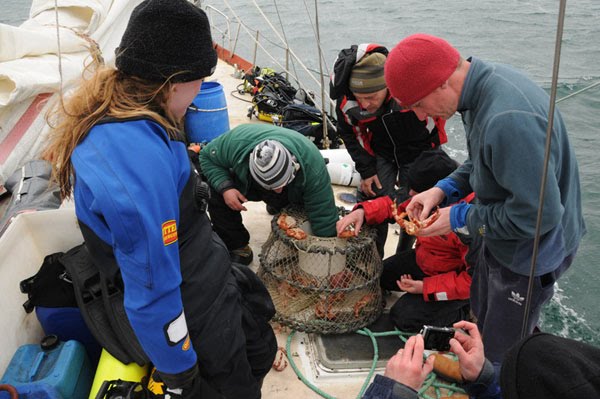
Looking for Snail Fish which parisitise crabs which we then had for dinner


Tasty Crab 


The infernal quadrat!


One island had Striated Caracara, this was my first encounter with these cheeky little monkeys! Little feathered bags of mischeif! By the time we had got around the island they had dragged the welly sack half way down the beach. They also hover just above your head which is rather disconcerting when you see how sharp their talons are! It's quite amazing that they are so unafraid when they have suffered from persecution.


Cheeky Johnny Rook inspecting out Wellies! 


  Nice male Kelp Goose
 

Striated Caracara 


  Taking a good look
 

Ripples in the bedrock 


  Dion Poncet taking a photo


Dion the skipper


Black Browed Albatross

My first encounter/sightings of Black browed Albatross. On the last day of the trip there were 3 flying around. The divers had seen them a few days before whilst further down the sound diving, but I had missed those, so I was really pleased to see them.


Pintado Petrel

After a rather blowy night it was a nice morning although still blowing strong and this Pintado Petrel was paddling around the yacht. It almost got an unexpected bath as the toilet had broken and we were using a bucket, I spotted it just before emptying said bucket! Look before you chuck is a good idea!!


Southern Giant Petrel

So the next mission! On Sunday I'm heading over to West Falkland to do some botanical work with Rebecca - FC's botanist. This should last until about the 17th Dec when I fly back to Stanley to board the Golden Fleece and head off on another adventure! I will then be heading off to Sea Lion Island followed by Beauchene Island until the end of December! Getting the chance to visit Beauchene is rare, a small island and the furthest south in the Falkland Archipelago. It's also home to over 100,000 pairs of Black browed Albatross, 61,000 pairs of Rockhoppers, and various other Shearwaters, Prions, Tussacbirds, Cobb's Wren, Striated Caracaras etc.

So that's it for about a month! Happy Christmas to you all!